Qwertyman for Monday, October 26, 2026
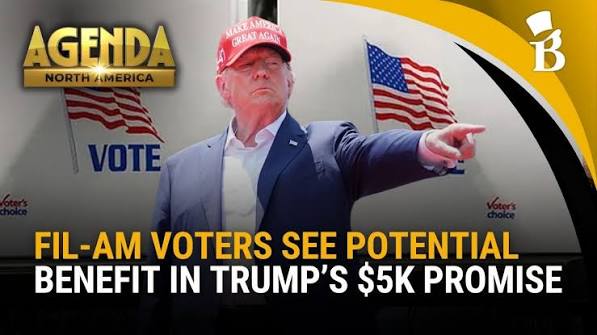
NEXT WEDNESDAY (Tuesday, November 3 in the US), Americans will troop to the polling stations to cast their votes in what promises to be a historic midterm election, by all accounts a referendum on the tempestuous first half of President Donald Trump’s renewed White House lease. Millions of Filipino-Americans will take part in that exercise, and how they vote could very well affect everything from how much the Pinoy jeepney driver will be paying for diesel to how China will behave in the West Philippine Sea—not to mention outcomes in Ukraine, Gaza, Iran, and other global hotspots.
According to US immigration sources, over 4 million Filipinos or people of Filipino ancestry now live in the US, of whom almost 400,000 are undocumented. About 2.5 million of these Filipino-Americans are eligible voters. With the US population currently standing at about 350 million—of whom 210 million have registered to vote in 2026—we can see that Fil-Ams roughly represent 1 percent of both the total US and voting population. That may not look like much on the national scale, but their concentration in several states—mostly in California, Hawaii, Texas, New York, and Washington, in that order—amplifies their political importance, particularly in key battleground areas. California alone accounts for over 1.5 million Fil-Ams.
A number of Filipino-American candidates are on the ballot. Running for reelection to the New York State Legislature is Steven Raga, who became the first Fil-Am to sit in that body in 2022. If successful, they will be joining many other political leaders of Filipino ancestry, some serving in the state legislatures of California, Wisconsin, Alaska, Arizona, Georgia, Hawaii, New York, North Carolina, and Tennessee. Bobby Scott, a Democrat representing Virginia, is the only Member of Congress with Filipino roots, serving in Washington since 1993. San Diego Mayor Todd Gloria is also a Fil-Am, and the first openly gay person in that capacity. Many other Fil-Ams serve on city councils.
But it will be more than ethnic representation at stake for Fil-Ams—and indeed, all Americans if not the world at large—on November 3.
Why does any of this matter to us? Because millions of Filipinos have relatives in America—I have a daughter in California and a niece in Michigan (both Democrats but independently minded women who married into Republican families, to give you an idea of how complex these relationships can get)—and also because any flatulence from Washington impacts our noses here in Manila.
Filipino-Americans are voting primarily for their own national and local concerns, as they should, but inevitably they’re also voting for the kind of global order their leaders will seek to forge. The old order based on rules and respect has been effectively dismantled by Trump, replaced by military power and a disdain for human rights domestically and around the world. So the Fil-Am voting in Kalamazoo for lower prices at their gas pump isn’t doing that just for Michigan but for the world as well.
Fil-Ams have historically leaned and voted Democratic (68 percent blue vs. 31 percent red among self-identified registered voters in 2024, according to a Pew poll), but there’s been a recent rightward shift noted in the polls, which has been true as well of other ethnic groups like Latinos, especially in 2024. However, this shift will be tested in these coming midterms, with issues like affordability, inflation, health care, jobs, and social security ranking topmost among voter and particularly Filipino-American concerns.
Fil-Am voters do need to come out more to the polling booths to make themselves heard. Overall, 90 percent of Asian American and Pacific Islanders (AAPI, the rubric under which Fil-Ams are usually grouped) have signified that they will vote in these midterms, but only 54 percent and 63 percent of eligible Fil-Am voters actually cast their ballots in 2020 and 2024, respectively. (In 2024, 54 percent went for Kamala Harris and 44 percent for Donald Trump among Fil-Ams nationwide.)
This is why both parties have been actively wooing Fil-Am voters to support them in the midterms, because their votes could mean victory or defeat in key races like Nevada’s, where Filipinos are the largest AAPI ethnic group at 44 percent.
Nevada is a particularly interesting story. The state doesn’t figure in our migration maps as much as California, Hawaii, or New York do, but Filipinos moved to Nevada in droves in the 1990s and 2000s, attracted by its lower cost of living and jobs in the gaming and health care industries. Today about 200,000 Fil-Ams live there, representing 60,000 votes being courted by Democrats and Republicans with karaoke and kamayan parties.
How did it go in Nevada the last time? A report from the Washington Post dated October 30, 2024—just a week before the election that put Trump back in power—shows how pliable the Fil-Am voter’s mind could be:
“While headlining a Las Vegas rally advertised as a celebration of Asian Americans and Pacific Islanders, Trump told the crowd that he would build an economy that supports the Asian American community. ‘So many amazing Nevada Filipinos, right?’ Trump told the crowd, earning boisterous cheers. ‘… You all are the greatest people, hardworking people, and we’re going to take care of you.’
“Harry Cheng, 57, arrived at the rally an undecided voter. ‘I just wanted to hear what people had to say,’ said Cheng, who immigrated from the Philippines to the United States in 1989.
“By the end, he was convinced.
He knew Trump had made anti-Asian comments—including referring to the coronavirus as the ‘Chinese virus,’ ‘Wuhan virus’ and ‘kung flu’—in the past. But the former president and fellow Republican speakers made a strong case for closing the border and improving the economy, he said.
‘The number of migrants crossing the border has turned into a crisis, Cheng said. Meanwhile, he had immigrated ‘the right way.’
“Besides, he said, ‘Trump also made statements that were pro-Asian. I just heard it firsthand.’
“He stood near a lifelike cutout of the former president as the crowd filtered out of the rally and glanced at campaign T-shirts for sale. He planned to register as a Republican when he got home, Cheng said.”
Thanks to voters like him, Trump won Nevada by a sliver of a margin, at 49.8 percent against Harris’ 48.3 percent. I wonder what Harry Cheng is thinking now, and how he’ll vote on November 3rd.
(Image from Bilyonaryo News Channel)